
The best ski goggles for night riding are those with a high **VLT (Visible Light Transmission)** percentage, typically featuring a **clear, yellow, or light rose lens** to maximize visibility and contrast under artificial resort lighting. When selecting your perfect pair, the most critical factors beyond lens color are superior anti-fog technology, a comfortable and helmet-compatible fit, and a wide field of view. Choosing the right goggle isn't just about performance; it's a crucial decision for your safety on the slopes after the sun goes down.
Why Specialized Goggles Are a Must for Night Skiing
Skiing under the stars is a magical experience, but it presents a unique set of visibility challenges. The slopes are illuminated by powerful, but often uneven, artificial lights that can create deep shadows and flat light conditions. Attempting to use your standard sunny-day goggles, which are designed to block light, is not only ineffective but also dangerous. These dark lenses can obscure icy patches, bumps, and other skiers, significantly increasing your risk of an accident. Your eyes need to gather as much light as possible to interpret the terrain accurately.
Specialized **night ski goggles** are engineered to do the opposite: they maximize the amount of light reaching your eyes. By using specific lens tints that enhance contrast, they help define shadows and highlight the subtle contours of the snow under floodlights. This enhancement allows you to react faster, ski with more confidence, and, most importantly, stay safer. Think of it as switching from sunglasses to clear prescription glasses in a dimly lit room—the difference in clarity is night and day.
The Single Most Important Factor: VLT and Lens Color
When diving into the world of ski goggles, you will constantly encounter the term VLT. Understanding this metric is the key to unlocking perfect night vision on the slopes. It is, without a doubt, the most important specification to check.
What is VLT (Visible Light Transmission)?
Visible Light Transmission (VLT) is a measurement, expressed as a percentage, that indicates how much light a goggle lens allows to pass through to your eyes. The scale ranges from around 3% (for bright, bluebird glacier conditions) to over 90% (for dark or stormy conditions). For night skiing, your goal is to let in the maximum amount of light, so you should be looking for a lens with a **very high VLT, typically in the 65% to 95% range**. A higher VLT number means a lighter lens and better visibility in low-light environments.
The Best Lens Colors for Night Riding
While a high VLT is paramount, the actual color or tint of the lens also plays a vital role in enhancing contrast and depth perception under artificial lights. Here are the top choices for night riding:
| Lens Color | Typical VLT Range | Pros | Cons |
|---|---|---|---|
| Clear | 80% - 95% | Allows maximum light transmission. True-to-life color perception. Excellent for purely dark conditions. | Offers no contrast enhancement; can feel "flat". Not ideal for overcast daytime use. |
| Yellow / Gold | 65% - 75% | Filters out blue light, significantly boosting contrast and making details pop. Excellent for flat light and foggy conditions as well. | Slightly alters color perception. Can be too bright if used at dusk. |
| Light Rose / Amber | 50% - 70% | Greatly enhances depth perception and contrast. Soothing to the eyes. A very versatile low-light option that works well for stormy days too. | The slightly lower VLT might be less optimal than a clear lens on the very darkest nights. |
Lenses to Absolutely Avoid for Night Skiing
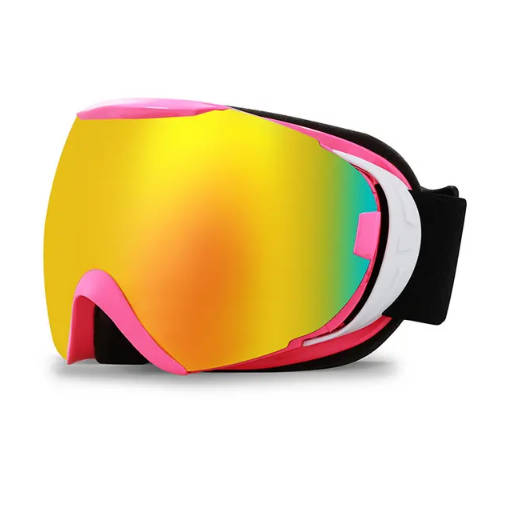
To ensure your safety, it's critical to know what *not* to wear. Never use dark or heavily mirrored lenses for night riding. This includes lens colors like dark grey, black, dark brown, or any lens with a VLT below 40%. Additionally, *polarized lenses* should generally be avoided. While excellent for cutting glare on sunny days, they can make it difficult to distinguish between snow and ice under artificial light, as they filter out the glare that often indicates an icy patch.
Beyond the Lens: Critical Features for Night Goggle Performance
A world-class lens is useless if it's constantly fogging up or doesn't fit your face. Several other features are critical for a great night skiing experience, primarily focused on maintaining clear, unobstructed vision.
Winning the War on Fog: Anti-Fog Technology Explained
Fogging is the nemesis of every skier, and the problem can be worse at night due to greater temperature differentials. Look for goggles with a multi-pronged defense against moisture buildup:
Dual-Pane Lenses: This is a non-negotiable feature. Like a double-pane window, it creates a thermal barrier between the cold outside air and the warm, moist air inside your goggles, drastically reducing the chance of condensation forming.
Anti-Fog Coatings: Reputable manufacturers apply a hydrophilic (water-absorbing) chemical treatment to the inside of the lens. Be extremely careful not to wipe this coating off, especially when wet. Gently dab with the provided microfiber bag only when necessary.
Proper Ventilation: Good goggles have vents along the top, bottom, and sides of the frame. These vents allow air to circulate, wicking moisture away before it can turn into fog. Ensure the vents are not blocked by your helmet.
Finding the Perfect Fit for Comfort and Safety
An improper fit can lead to cold spots, discomfort, and a compromised field of view. A well-fitting goggle should create a firm but comfortable seal around your face with no pinching or excessive pressure, especially on the bridge of your nose.
Frame Size and Helmet Compatibility: Most importantly, your goggles need to integrate seamlessly with your helmet. There should be no significant gap between the top of the goggle and the brim of your helmet (the dreaded "gaper gap"), as this exposes your forehead to the cold and looks silly. Likewise, the helmet shouldn't push the goggles down on your nose. Always try on goggles with your helmet if possible.
OTG (Over The Glasses) Goggles: If you wear prescription glasses, you must look for OTG-compatible goggles. These models are designed with extra interior volume and have small cutouts in the frame foam to accommodate the arms of your glasses without causing pressure points.
Lens Shape: Spherical vs. Cylindrical Lenses
Goggle lenses come in two primary shapes. A **cylindrical lens** is curved on the horizontal axis but flat vertically. It's a classic look and is often more budget-friendly. A **spherical lens**, however, is curved on both the horizontal and vertical axes, mimicking the shape of your eyeball. For night skiing, a spherical lens often provides a slight edge, offering superior peripheral vision and less optical distortion, which helps in perceiving the terrain more accurately.
The Smart Investment: Interchangeable Lens Systems
Unless you plan on owning multiple pairs of goggles, the most practical and cost-effective solution is to invest in a goggle with an **interchangeable lens system**. Most mid-to-high-end goggles now come with two lenses: one for bright, sunny conditions and a bonus lens specifically for low-light or night conditions (often yellow or rose). This gives you the versatility to handle any lighting condition with a single frame.
These systems have evolved significantly. Traditional systems involve manually snapping a lens out of the frame's groove. Newer, more popular systems use high-powered magnets, like Anon's MAGNA-TECH, allowing for a nearly instantaneous and effortless lens swap, even while wearing gloves. While magnetic systems are more expensive, their convenience is a game-changer for skiers who frequently experience changing weather conditions.
Top Goggle Considerations for Night Skiing
While this guide focuses on *how* to choose, it helps to know which brands are known for their exceptional low-light lens technology. Look for models from top-tier brands like **Smith** (with their ChromaPop Storm lenses), **Oakley** (with Prizm Rose or Prizm HI Pink lenses), and **Anon** (with their Perceive Cloudy Pink or Cloudy Burst lenses). These brands have invested heavily in R&D to create lenses that don't just make things brighter but actively enhance contrast and definition in challenging light.
Care and Maintenance for Your Night Skiing Lenses
Your high-VLT night lens is a piece of precision optical equipment. Its coatings are delicate and require proper care to maintain performance. Never use a paper towel, your sleeve, or the rough part of your glove to wipe the lens, especially the inner lens, as this will scratch it and destroy the anti-fog coating.
If you need to clear snow, gently shake the goggles or use the soft microfiber bag that came with them. If the inside gets wet, let it air dry completely before storing it. When you're done for the night, always store your goggles in their protective bag and a hard case if possible to prevent scratches and impact damage during transport.
Frequently Asked Questions (FAQ)
Can I use yellow lenses for day skiing?
You can, but it's not ideal. While yellow lenses are fantastic for overcast, stormy, or foggy days, they don't block enough light for bright, sunny conditions. On a bluebird day, you'll find yourself squinting and experiencing eye fatigue. It's best to switch to a darker, mirrored lens for daytime use.
Are photochromic lenses good for night skiing?
Photochromic lenses, which automatically adjust their tint based on UV light exposure, are generally *not* the best choice for night skiing. At night, there is no UV light, so the lens will remain in its lightest state. However, this lightest state often doesn't have as high a VLT as a dedicated clear or yellow lens. Furthermore, their transition speed can be too slow for rapidly changing light, like moving in and out of brightly lit base areas.
What VLT is best for night skiing?
The best VLT for night skiing is between **65% and 95%**. A clear lens will be on the higher end of this spectrum (80-95%), while a contrast-enhancing yellow or light rose lens will typically be in the 65-75% range. Anything below 60% will start to feel too dark under artificial resort lighting.
How do I stop my goggles from fogging up at night?
First, buy goggles with good ventilation and a dual-pane lens. Second, don't overdress, as excessive body heat and sweat are the primary causes of fog. Never put your goggles on your forehead; your skin will transfer heat and moisture directly to the inside of the goggle. Finally, if you fall, clear snow off the vents immediately to maintain airflow.
Final Thoughts: Making a Confident Choice
Choosing the best ski goggles for night riding boils down to prioritizing light transmission, contrast enhancement, and fog prevention. Start by focusing on a lens with a high VLT—either clear for maximum brightness or yellow/light rose for superior contrast. From there, ensure the goggle has robust anti-fog features and fits perfectly with your face and helmet. By investing in the right pair, you're not just buying a piece of equipment; you're investing in a safer, clearer, and more enjoyable night on the mountain.
