
Cycling glasses trends for 2025 are shaping up to be a dynamic fusion of form and function, with oversized shield styles continuing their reign while becoming more ventilated and angular, hyper-aero designs integrating seamlessly with helmets for marginal gains, and lens technology reaching new heights in clarity and adaptability. Expect to see a surge in sustainable materials, deeper customization options, and versatile "gravel" aesthetics that blur the line between high performance and everyday style.
The world of cycling eyewear is no longer just about UV protection. It has evolved into a critical component of a cyclist's performance, safety, and personal expression. As we pedal towards 2025, the trends reflect a sophisticated understanding of a rider's needs, combining cutting-edge science with bold aesthetic statements. Whether you're a competitive road racer chasing watts, an adventurous gravel grinder exploring new paths, or a daily commuter, the upcoming year in cycling sunglasses offers something to enhance every ride. This guide will navigate you through the key trends, from the dominant shield styles and aerodynamic advancements to the revolutionary lens technologies that will define cycling eyewear in 2025.
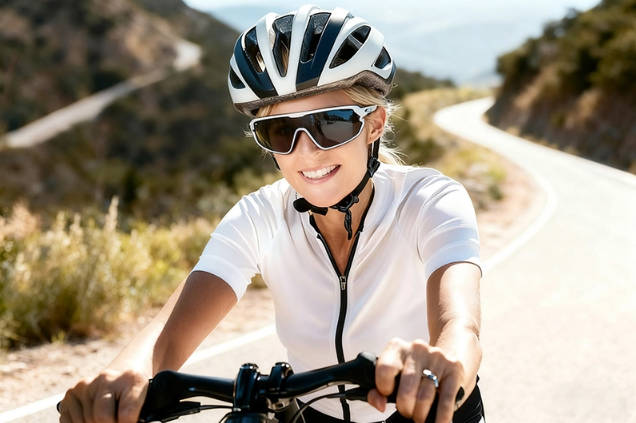
I. The Reign of the Shield: Bigger, Bolder, and Better for 2025
The trend for oversized, single-piece shield sunglasses shows no signs of slowing down as we head into 2025. What started as a retro-revival has now become the definitive look in the pro peloton and among amateur cyclists alike. These large-format lenses offer an unparalleled field of vision and superior protection, making them as practical as they are stylish. The sheer size of a shield lens acts as a barrier, deflecting wind, rain, insects, and road debris far more effectively than traditional dual-lens glasses, boosting rider confidence and safety on fast descents or in tight group formations.
Why Have Shield Glasses Become the Standard for Cyclists?
The dominance of shield glasses is a tale of two convergent benefits: unmatched function and unapologetic fashion. From a functional standpoint, the continuous, frameless, or semi-frameless bottom edge of a shield provides a completely unobstructed vertical field of view. This is critical when you're in an aggressive, head-down riding position, allowing you to see further up the road without needing to tilt your head, which can compromise your aerodynamic profile and cause neck strain. The expansive coverage also minimizes wind getting into your eyes, reducing tearing and fatigue on long, blustery rides.
Aesthetically, shield glasses make a bold statement. Influenced heavily by professional riders and brands like 100%, Oakley, and POC, these glasses project an image of seriousness and speed. They have become a key part of the modern cyclist's "kit," a piece of equipment that signals dedication to the sport. The large surface area also serves as a canvas for striking designs and vibrant lens colors, allowing riders to express their personal style while enjoying top-tier performance benefits.
What's New for Shield Styles in 2025?
For 2025, the evolution of the shield is all about refinement and problem-solving. While the large size remains, brands are introducing more angular and aggressive shapes that improve helmet compatibility and aerodynamic flow. A key focus is on ventilation to combat the age-old problem of fogging. Look for strategically placed vents along the top of the lens or integrated into the frame structure itself. These channels direct airflow behind the lens, wicking away moisture and preventing condensation when you stop at a traffic light or start a sweaty climb. Furthermore, advancements in materials are making these large glasses surprisingly lightweight and comfortable for all-day wear.
II. The Aero Revolution: How Your Glasses Make You Faster
In the world of competitive cycling, where races can be won or lost by fractions of a second, every piece of equipment is scrutinized for its aerodynamic efficiency. Once an afterthought, cycling glasses are now at the forefront of this "free speed" revolution. The 2025 trend is a move towards a holistic aero system, where eyewear is designed not in isolation, but in tandem with the helmet to create the smoothest possible airflow over the rider's head.
The Science Behind Aero Eyewear Integration
The leading edge of a rider is their head and face, which is the first thing to break the wind. A poorly designed pair of glasses can create significant turbulence, disrupting the airflow that the helmet is trying to manage, thereby increasing drag. Brands are now using extensive Computational Fluid Dynamics (CFD) modeling and wind-tunnel testing to perfect the interface between glasses and helmet. The goal is to create a seamless transition from the lens to the helmet's brow, eliminating any gaps or ledges that can trip up the air.
This scientific approach manifests in specific design features. You'll see glasses with a raised top frame or a unique lens curvature that sits perfectly flush against the front of leading aero helmets. The arms, or temples, of the glasses are also shaped to integrate smoothly with the helmet's sides and ventilation channels, guiding air cleanly around the head rather than creating a vortex. Models like the POC Propel and the unique form of the Oakley Kato are prime examples of this design philosophy, where the eyewear is an integral part of the rider's aerodynamic profile.
Leading Aero Cycling Glasses to Watch in 2025
As this trend accelerates, several models stand out as benchmarks for aero-integrated design. The POC Propel, developed with input from the EF Education-EasyPost pro team, features a distinctive trailing edge on the side of the lens to help push air away from the ears. The Oakley Encoder Strike and Kato models use a radical lens shape that wraps around the nose, creating an architectural arch that adds rigidity and promotes a smooth, uninterrupted flow of air. For 2025, expect to see more brands launching flagship models developed specifically with wind tunnel data and designed to pair perfectly with their top-end aero road helmets.
III. Lens Technology in 2025: It's All in the Optics
While frames and shapes grab the headlines, the true heart of any great pair of cycling glasses is the lens. For 2025, lens technology is pushing the boundaries of what's possible, focusing on adaptability, enhanced contrast, and better solutions for prescription-wearers. These advancements are not just about seeing clearly; they're about seeing better, helping you read the road surface, spot hazards faster, and reduce eye strain over long distances.
The Unstoppable Rise of Photochromic Lenses
What if one lens could adapt to any light condition? That's the promise of photochromic lenses, and in 2025, they are more effective than ever. These "transition" lenses automatically darken when exposed to UV light and lighten in overcast or low-light conditions. For cyclists who often ride from dawn to dusk, through shaded forests and into open sunlight, this technology is a game-changer. It eliminates the need to carry multiple lenses or sunglasses. The latest generation of photochromic lenses offers a wider tint range (e.g., from nearly clear to a dark sunglass) and, crucially, a faster reaction time, making them more practical and safer than ever before.
Beyond UV: How Contrast-Enhancing Lenses Change Your Ride
Modern premium lenses do more than just dim the sun. They are engineered to manipulate the light spectrum to enhance specific colors, boosting contrast and depth perception. This technology allows you to see every crack, pothole, and patch of loose gravel with stunning clarity. Each major brand has its own proprietary version:
Oakley's Prizm™ Lens Technology: Perhaps the most well-known, Prizm lenses are fine-tuned for specific environments. The Prizm Road lens, for example, enhances whites and yellows while boosting greens and blues, making road lines and surface textures pop.
Smith's ChromaPop™: This technology filters light at two specific wavelengths to eliminate color confusion for the brain. The result is greater definition, more natural color, and unparalleled clarity.
100%'s HiPER® Lens: Similar to its competitors, the HiPER lens ramps up contrast and color, filtering out certain light waves to make details more vivid and easier to process.
Choosing a contrast-enhancing lens is one of the most significant upgrades you can make to your cycling experience, transforming how you see and interact with your environment.
Clearer Vision for All: Prescription Solutions for High-Wrap Frames
For years, cyclists who require prescription lenses faced a difficult choice: compromise on style and coverage with flatter frames, wear cumbersome inserts, or switch to contact lenses. The good news is that 2025 brings much-improved solutions. Brands are offering more sophisticated and wider-fitting prescription inserts that integrate cleanly behind the main shield. More advanced, however, is the rise of "digital lens surfacing" for high-wrap frames. This technology re-calculates the prescription across the entire curved surface of the lens, correcting the distortion that would typically occur at the periphery and providing clear, sharp vision across your entire field of view.
IV. More Than a Look: Other Key Cycling Eyewear Trends for 2025
Beyond the dominant trends of shields and aero, several other important movements are shaping the future of cycling eyewear. These trends reflect a broader shift in the sport towards personalization, environmental responsibility, and versatility.
Customization and Personalization: Your Glasses, Your Way
Athletes no longer want to just pick a product off the shelf; they want to make it their own. Eyewear brands are responding with comprehensive customization programs. Companies like Oakley and SunGod lead the way, offering online tools that allow you to become the designer. You can select your frame color, choose from a wide array of lens types (including photochromic, polarized, and Prizm), pick the color of the icons and nose pieces, and even add a custom laser-etched message to the lens. This trend allows you to create a pair of glasses that is perfectly tailored to your performance needs and aesthetic preferences.
The Sustainability Shift: Greener Gear for a Greener Ride
The cycling community has a deep appreciation for the outdoors, and there is a growing demand for gear that minimizes its environmental impact. In 2025, sustainability is a key selling point. Look for frames made from bio-based materials like castor-oil-derived polyamides, which offer the same durability and low weight as traditional plastics but with a significantly smaller carbon footprint. Brands like POC and the UK-based SunGod are champions of this movement, also utilizing recycled materials and offering lifetime warranties on frames to reduce waste and promote a culture of repair over replacement.
The 'Gravel' Aesthetic: Blurring Performance and Style
The explosion of gravel riding has introduced a new ethos into cycling: one that values adventure and versatility as much as pure speed. This has created a demand for eyewear that performs at a high level but doesn't look out of place at a post-ride coffee stop. The gravel aesthetic often involves slightly smaller (though still large) frames, more classic or retro-inspired shapes, and lens tints that are optimized for dappled light and varied terrain. These glasses bridge the gap between pure-performance shields and casual sunglasses, offering the best of both worlds for riders who do a little bit of everything.
V. How to Choose the Right Cycling Glasses for You in 2025
With so many trends and technologies, choosing the perfect pair of cycling glasses can feel overwhelming. The key is to prioritize your personal needs regarding fit, function, and riding style. This practical guide will help you narrow down your options and make an informed decision that you'll be happy with for many miles to come.
Finding the Perfect Fit: Face Shape and Helmet Integration
Fit is the most critical factor. Poorly fitting glasses will be uncomfortable, slide down your nose, and fail to provide adequate protection. While face shape is a good starting point (e.g., angular frames can complement a round face, while rounder glasses can soften an angular jawline), the most important test is helmet compatibility. Always try on new glasses while wearing your cycling helmet. Check for any interference between the top of the glasses and the brow of the helmet, and ensure the temple arms sit comfortably above or alongside the helmet's retention system without creating pressure points.
Your 2025 Cycling Glasses Feature Checklist
Use this table to evaluate potential options and ensure you're getting the features that matter most for the riding you do. By considering each of these elements, you can find a pair that perfectly balances the 2025 trends with your personal performance and comfort needs.
| Feature | What to Look For in 2025 |
|---|---|
| Frame Style & Coverage | Oversized Shield: For maximum protection and field of view. Aero-Integrated: For competitive racers seeking marginal gains. 'Gravel' Style: For on/off bike versatility. |
| Lens Technology | Contrast-Enhancing (Prizm, ChromaPop, etc.): A must-have for reading road/trail surfaces. Photochromic: Ideal for rides with highly variable light conditions. |
| Ventilation | Look for integrated vents in the lens, frame, or brow bar to prevent fogging during climbs and at stops. A hydrophobic coating that sheds sweat and rain is also a major plus. |
| Adjustability & Fit | An adjustable nose piece and interchangeable temple arms are key for a secure, customized fit. Grippy, hydrophilic rubber on the nose and temples will ensure the glasses stay put even when you're sweating. |
| Materials | Consider frames made from lightweight, durable materials like Grilamid TR-90 or O-Matter™. For an eco-conscious choice, look for frames made from bio-based or recycled plastics. |
| Customization | Check if the brand offers options to choose lens tints, frame colors, and other components to create a personalized pair that matches your kit and style. |
VI. Conclusion: The Future is Clear and Customised
The cycling glasses trends for 2025 demonstrate a remarkable maturation of the market. Eyewear is no longer an accessory but an essential piece of integrated equipment designed to make you safer, faster, and more comfortable. The continued dominance of bold shield styles is now enhanced with sophisticated ventilation and lighter materials. The pursuit of speed has driven the development of hyper-aero designs that work as a system with your helmet. And at the core of it all, revolutionary lens technologies are transforming the way we see the world on two wheels. As you look for your next pair, the focus is on a perfect fusion: the fusion of bold aesthetics with data-driven performance, advanced optics with personal values like sustainability, and a perfect fit that makes your eyewear an invisible yet indispensable part of every single ride.
